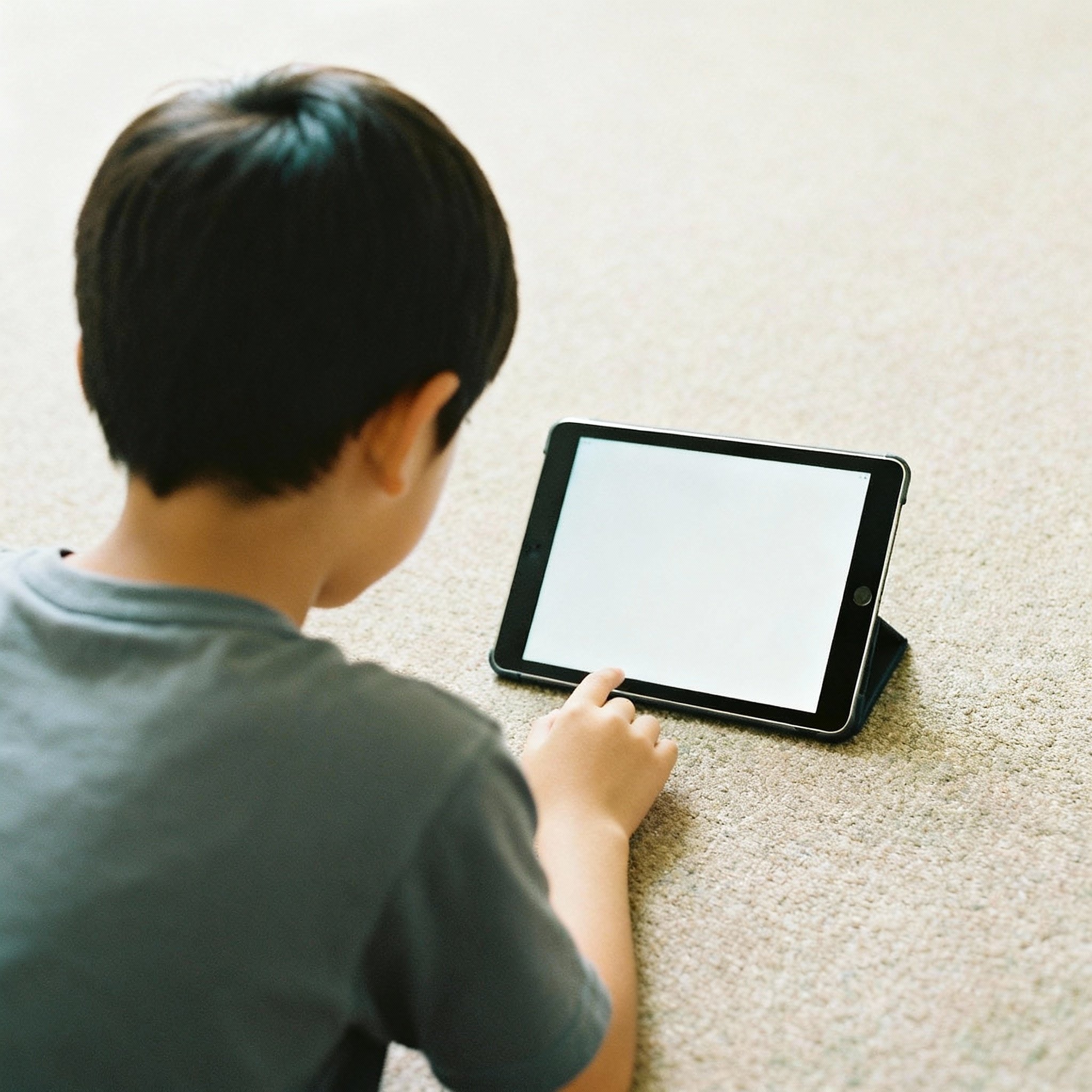
The iPad. In the world of special needs parenting, it is both a miraculous savior and a formidable villain.
For years, that glowing rectangle has been our lifeline. It has served as a communication device, a soothing mechanism during sensory meltdowns, and, let’s be honest, a reliable babysitter when my husband and I desperately needed twenty minutes to cook dinner or simply breathe.
But lately, the dynamic has shifted. What was once a tool has become a crutch—for him and for us. The transition from helpful resource to obsessive fixation happened slowly, then all at once. We realized that our son wasn’t just enjoying his iPad; he was disappearing into it.
If you are a parent of a neurodivergent child, you probably know this struggle intimately. You know the guilt of handing it over and the terror of taking it away. We are currently in the trenches of trying to limit screen time for our autistic son, and it is easily one of the hardest things we have ever done. Here is why we decided to make a change, the battles we are facing, and the strategies we are testing out.
The Tipping Point: Why We Knew Something Had to Change
It wasn't one specific event that made us realize we had a problem; it was an accumulation of behaviors that we could no longer ignore. The iPad had stopped being a part of his day and had started dictating his day.
The Meltdowns Were Getting Worse
We noticed a direct correlation between the amount of time he spent on the tablet and the severity of his dysregulation when the battery died or when we said "time's up." These weren't just standard protests; they were full-blown, aggressive meltdowns. The transition away from the screen was physically painful for him. The dopamine crash was real, and the fallout was exhausting for the whole family.
Social Withdrawal
Autism already affects social communication, but the iPad was exacerbating the isolation. When he was on his device, he was unreachable. He stopped responding to his name, stopped seeking us out to show us things, and stopped playing with his physical toys. He was existing in a digital silo, and we missed our boy.
Sleep Disturbances
Even with blue light filters and "Night Shift" mode, the stimulation was wrecking his sleep hygiene. He was waking up at 3:00 AM asking for the iPad. His brain was so wired that he couldn't wind down, which led to tired parents, a tired child, and a very grumpy household the next morning.
The Difficulties We Are Facing
Deciding to limit screen time is easy. Actually doing it? That’s a different story.
The biggest hurdle is the "void." When you take away the thing that occupies 80% of a child's attention, you have to fill that void with something else. For an autistic child who struggles with imaginative play or independent leisure skills, that void is terrifying. He doesn't just "go find something to do." He paces. He stims aggressively. He gets anxious.
This means that limiting his screen time requires significantly more energy from us. We have to be the entertainers, the regulators, and the playmates. It is exhausting work, especially when we are already running on fumes.
Then there is the guilt. Am I taking away his safe space? The world is loud and chaotic; the iPad is predictable and controllable. Is it fair to strip him of his comfort object? These questions plague me every time I lock the device away.
Strategies We Are Trying (and How They’re Going)
We are still in the trial-and-error phase. Some days are victories; others are total failures where we cave and hand the tablet back just to stop the screaming. But we are committed to the process. Here is what we are currently trying.
1. Visual Schedules and Timers
Abstract concepts like "five more minutes" mean nothing to our son. We have started using a visual timer (the kind with the disappearing red disk) so he can literally see time passing.
We also added "iPad time" to his visual picture schedule. This helps him understand that the iPad isn't gone forever—it just has its specific place in the daily routine, sandwiched between "snack" and "park."
** The Verdict:** This is helpful, but consistency is key. If we forget to set the timer, the transition is a disaster.
2. The "First-Then" Approach
We are leaning heavily on the "First/Then" principle. First we play with blocks, then we get 10 minutes of iPad. First we eat dinner, then we get iPad.
This turns the device into a reward for engaging in the real world, rather than a default state of being. It also motivates him to get through non-preferred tasks like getting dressed or brushing teeth.
The Verdict: surprisingly effective. He understands the transactional nature of this strategy.
3. Replacing, Not Just Removing
We realized we couldn't just take the screen away; we had to offer high-interest alternatives. We looked at what he loved about the iPad—visual stimulation, repetition, music—and tried to replicate that offline.
Sensory Bins: We created bins with water beads and kinetic sand to give him the sensory input he craves.
Music: We bought a simple MP3 player and a speaker so he can listen to his favorite songs without the visual component of a screen.
Physical Play: We invested in a mini indoor trampoline. If he needs to stim or get energy out, he can bounce instead of staring at a screen.
The Verdict: Hit or miss. The trampoline is a win; the sensory bins sometimes end up thrown across the room. But we are learning what engages him.
4. Cold Turkey Mornings
We implemented a hard rule: No screens before school. Mornings were becoming a battleground to get the device out of his hands so we could get on the bus. By removing the option entirely in the AM, we have actually had smoother mornings. He knows it’s simply not available, so he eats his breakfast and gets dressed with less resistance.
The Verdict: A game changer. It was a rough first three days, but now mornings are surprisingly peaceful.
5. Co-Viewing Instead of Solo Viewing
When he does have the iPad, we are trying to stop treating it as a babysitter. Instead, I’ll sit next to him. I’ll ask questions about what he’s watching. "Oh look, a red car! Where is the car going?"
This turns a passive, isolating activity into a shared social experience. It breaks the "zombie mode" trance and keeps him tethered to the real world, even while he’s digital.
The Verdict: Exhausting for parents, but good for connection. It prevents him from slipping into that unreachable state.
Finding the Balance
We are not aiming for a screen-free life. In 2024, that feels unrealistic and perhaps even unfair to a child who enjoys technology so much. What we are aiming for is balance.
We want him to know that the iPad is a fun thing to visit, but not a place to live.
If you are on this journey too, please know you aren't alone. It is messy and loud and filled with doubt. But yesterday, my son put down his iPad without being asked, walked over to me, and handed me a book to read to him.
It was a small moment. It only lasted five minutes before he asked for the device again. But it was a window opening. And right now, we’ll take every open window we can get.
Next Steps for Parents in the Trenches
If you are seeing the same red flags we saw, don't feel like you have to fix everything overnight.
Observe first: Spend a few days just tracking how much time they are actually on screens. The number might shock you.
Pick one battle: Start with "no screens during meals" or "no screens one hour before bed." Don't try to overhaul their whole life at once.
Forgive yourself: Some days, you will need the break. You will hand over the iPad so you can take a shower or cry in the pantry. That is okay. You are human.
Progress is slow, but reclaiming our children from the digital void is worth every difficult transition.
